
"You cannot manage what you cannot measure. Energy monitoring is the backbone of every electrification and decarbonization strategy."
— McKinsey & Company, «Software: the hidden catalyst for decarbonization» (2025)
On January 1, 2026, the European Union's Carbon Border Adjustment Mechanism (CBAM) ended its transitional phase and entered the definitive period. With the roughly two-year grace period over, every non-EU producer exporting steel, aluminum, cement, fertilizers, electricity, or hydrogen to the EU must now calculate the greenhouse gas emissions embedded in their products and provide that data to EU importers — and the data must be verified by an accredited third party. Manufacturing accounts for roughly 30% of global greenhouse gas emissions. For the first time, regulators and markets are simultaneously demanding hard numbers on what happens inside the factory gate.
The problem is that most manufacturers do not have these numbers. Until now, carbon reporting has relied on secondary data — finance teams collecting annual electricity and gas bills and multiplying them by emission factors. Under the CBAM definitive period, however, default values carry an escalating penalty: +10% in 2026, +20% in 2027, and +30% from 2028 onward. The system is designed so that the more you rely on defaults, the more you pay. Companies that cannot submit measurement-based primary data will either absorb a carbon cost higher than their actual emissions or be pushed out of EU supply chains.
This article starts from a single question: what does a manufacturer ultimately have to change to secure the verifiable primary carbon data that regulators and customers demand? Much of the answer lies not in sustainability software, but in how you collect, contextualize, and govern the operational technology (OT) data flowing through the plant floor in real time. Carbon accounting is no longer an accounting problem — it is an industrial data infrastructure problem.

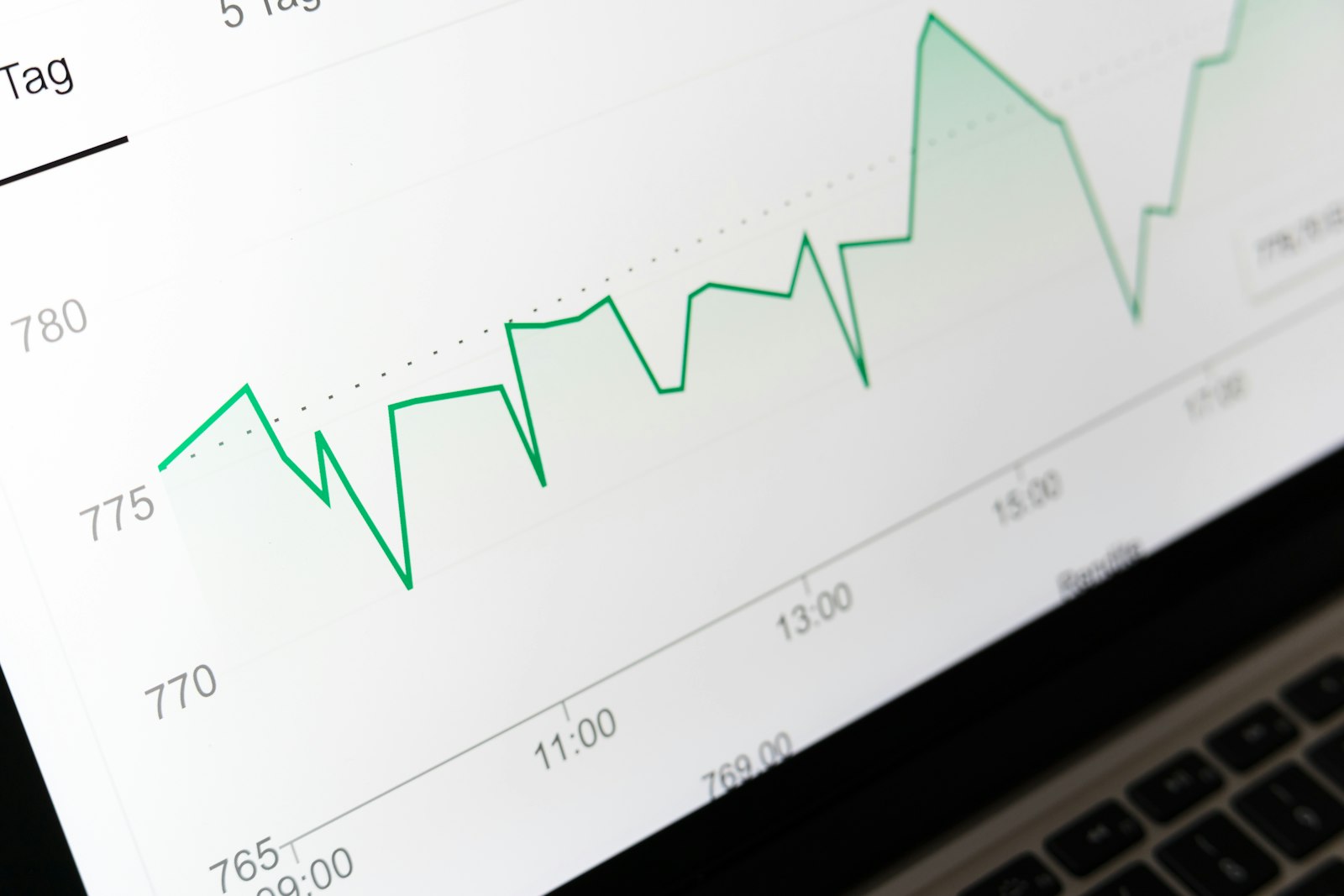
Process data becomes the primary source of carbon data · Image: Unsplash
The CBAM Definitive Period — What Fundamentally Changed
At the heart of the definitive period is the shift from reporting to cost. During the transitional phase (October 2023 – December 2025), importers reported embedded emissions quarterly but bore no financial burden. From the definitive period onward, they must actually purchase CBAM certificates linked to the EU ETS (Emissions Trading System) price to offset those emissions. CBAM is designed to align the carbon cost of non-EU imports with the carbon price already borne by EU producers, preventing so-called carbon leakage.
In 2025, the European Commission simplified some of the rules to lower the compliance burden. A de minimis exemption for small annual import volumes removed many small and mid-sized importers from the obligation, but the large import volumes that account for most actual emissions remain fully within the regulation. At the same time, the Commission proposed extending CBAM's scope to downstream products — widening the regulatory umbrella beyond basic materials to the processed goods made from them.
For manufacturers, what entering the definitive period means is clear. Emission calculation rules are now aligned with the EU ETS's system boundaries and monitoring methods, and producers must monitor emissions at the installation level, attribute them to specific production processes, and then allocate them to the individual products made in those processes. This is work that requires process meters and production (MES) data — not accounting ledgers.
- Default-value penalty: +10% in 2026, +20% in 2027, +30% from 2028 — an economic lever that forces actual measurement
- A three-stage allocation requirement: installation → process → product
- Mandatory verification by an accredited third party — data traceability is a precondition
- Proposed extension of scope to downstream products — a continuously expanding set of regulated companies
- For complex goods such as steel and aluminum, upstream precursor data must be verified as well

Allocating installation-level emissions to processes and products is impossible without real-time measurement
The Default-Value Trap — Why Primary Data Is Money
Carbon data comes in two broad kinds. Primary data comes from what a company actually measures — the actual BOM (bill of materials), actual process energy consumption, actual supplier information. Secondary data is estimated from industry-average emission factor databases. Regulators and the procurement teams of large enterprises are drawing an increasingly strict line between the two, because only a product carbon footprint (PCF) calculated from primary data can withstand verification and audit.
CBAM's default-value design turns this distinction into an explicit price. Imports that cannot back their numbers with measured values are assigned the inflated default values, and the excess translates directly into CBAM certificate purchase costs. In other words, if a plant cannot prove its own emissions with primary data, it pays an "insurance premium" on that uncertainty at the EU border — an amount that grows every year. The quality of carbon data has become a margin issue.
This pressure has already taken concrete form as contract terms in the automotive industry. OEMs have begun requiring standardized PCF submissions from suppliers, and the automotive data ecosystem Catena-X has defined the Primary Data Share of a PCF as a mandatory metric. It states, in absolute terms, what percentage of a given product's carbon footprint is based on the company's own measured data; after the transition period ends in 2027, it becomes a mandatory exchange item together with a Data Quality Rating.
- Primary data = measured BOM, process energy, and actual supplier data → a PCF that withstands audit
- Secondary data = industry-average emission factors → estimates, marked down by regulators and procurement teams
- Primary Data Share: a mandatory metric stating the measured-data share of a PCF as a percentage
- Low data quality = high default values = a direct increase in CBAM costs
The Jungle of Standards — ISO 14067, GHG Protocol, ISO 14064
The first wall manufacturers hit when entering carbon accounting is the multi-layered structure of standards. Organization-level emissions are handled under the GHG Protocol's Scope 1/2/3 framework and ISO 14064, while individual product-level emissions are handled under ISO 14067 (product carbon footprint). Pick the wrong standard and you can end up rewriting the entire report.
The hardest part of the GHG Protocol is Scope 3 — indirect emissions upstream and downstream in the supply chain. It is common for more than 70% of a manufacturer's emissions to sit in Scope 3, and that figure is ultimately filled in by the sum of the PCFs suppliers submit. The PCF demanded of you becomes someone else's Scope 3, and the PCF you submit contains your own suppliers' data in turn. Carbon data propagates along the value chain like dominoes.
The standards world is also moving toward integration. The GHG Protocol and ISO announced a strategic partnership in September 2025 to harmonize carbon accounting standards globally, and the GHG Protocol released its Phase 1 progress report on March 31, 2026. A public consultation draft is targeted for mid-2026, with the final revised standards aimed at 2027–2028. Companies designing data infrastructure today should build in the direction of these revisions in advance — particularly the strengthening of primary data and verifiability.
- ISO 14064 / GHG Protocol Scope 1/2/3 — organization (corporate) level emissions
- ISO 14067 — product-level carbon footprint (PCF); cradle-to-gate is the standard B2B boundary
- Scope 3 = supply chain emissions, usually the bulk of a manufacturer's total
- GHG Protocol–ISO partnership (Sept 2025) → revised standards targeted for 2027–2028

Two layers of standards — organization-level and product-level — intertwine along the value chain
System Boundaries and Allocation — PCF Calculation in Practice
The core requirement of ISO 14067 is the definition of the system boundary. The standard boundary for B2B product reporting is cradle-to-gate — from raw material extraction to the factory gate. It includes raw material processing, component production, and manufacturing processes, but excludes distribution, use, and disposal. Because the same product's PCF can vary widely depending on where the boundary is drawn, defining the boundary is defining the scope of data collection.
Allocation is harder still. When one line produces multiple products, or one installation's electricity is shared across several processes, how do you divide those emissions among individual products? The result differs depending on whether you use physical allocation (by mass or energy) or economic allocation (by value). CBAM prescribes attributing installation emissions to production processes and then allocating them to the outputs of those processes. Doing this allocation reliably requires per-process energy metering and production volume data that are consistent along the time axis.
Ultimately, PCF accuracy is directly proportional to how granularly you measure. Divide by a single site-wide electricity figure and the error is large; meter at the line, cell, and equipment level and both the measured share and the precision rise together. This is the point where carbon accounting stops being the sustainability department's job alone and becomes the job of process engineers and data teams.
Why OT Data Becomes the Primary Source for Carbon Accounting
The maxim "you cannot manage what you cannot measure" is literally true in the carbon domain. Real-time energy monitoring turns a plant into an intelligent system that identifies emission waste on its own. Industrial energy management systems (IEMS) provide real-time data on energy use to surface inefficiencies, and that data in turn becomes the primary input to the PCF. The source of carbon data is not sustainability software but the OT signals coming from PLCs, SCADA, power meters, and flow meters.
McKinsey estimates that global emissions could fall roughly 20% — from 58 billion tons in 2024 to 47 billion tons in 2030 — driven mainly by electrification. But to prove the effect of that electrification and efficiency work, you need data measured on the same scale before and after the improvement. This is why energy monitoring is called the backbone of every decarbonization strategy. Both the ROI of improvement initiatives and the evidence for regulatory compliance stand on this data.
Here, the role of Industrial DataOps is decisive. Without a pipeline that collects field signals scattered across hundreds of protocols, contextualizes them with an asset model (ISA-95), stores them as time series, and combines them with emission factors, no number of meters will produce verifiable carbon figures. Carbon data infrastructure is, in effect, one application of IIoT data infrastructure.
- The actual sources of primary carbon data: power meters, flow meters, PLC/SCADA tags, MES production records
- Real-time measurement → before/after comparison → proven decarbonization ROI
- ISA-95 asset models give signals context → enabling process- and product-level allocation
- Time-series storage + emission factors = an auditable PCF calculation pipeline

Only when power metering, flow, and production records come together does 'verifiable' carbon emerge
The Carbon Management Software Landscape — Who Is Targeting What
The carbon/ESG software market is growing fast and stratifying at the same time. According to market analyses, the top five vendors — IBM, SAP, Microsoft, Schneider Electric, and Salesforce — account for roughly 40% of 2025 revenue, a "moderate" level of concentration. They are strong in enterprise-wide ESG reporting and enterprise integration. SAP's approach is to embed climate capabilities inside its enterprise suite.
Specialists such as Persefoni, Watershed, and Plan A, by contrast, target the gaps: AI-driven Scope 3 automation and vertically specialized templates for heavy industry. Watershed has focused on supplier engagement, while Persefoni, building on new funding in March 2025, has put its weight behind launching dedicated product carbon footprint and life cycle assessment (LCA) capabilities. It is a signal that vendors see product-level accounting, beyond organization-level reporting, as the sustained growth area.
The segment driving market growth is worth noting. Sustainability add-ons — LCA, water and waste tracking, biodiversity impact — are projected to post the fastest compound annual growth rate (CAGR) at 12.15%, propelled by the EU's Digital Product Passport (DPP) mandate in 2026. The manufacturing segment is expected to hold the largest share of the carbon accounting software market in 2025, owing to regulatory pressure and its large emission volumes. Yet most of this software merely assumes the quality of its input data; it cannot create that data on the shop floor. This is where industrial data platforms and carbon software meet.
- Top five (IBM, SAP, Microsoft, Schneider, Salesforce): roughly 40% of 2025 revenue — enterprise integration
- Persefoni, Watershed, Plan A: AI Scope 3 automation, product-level LCA, heavy-industry specialization
- Sustainability add-ons at 12.15% CAGR — driven by the DPP mandate
- Manufacturing the largest segment in 2025 — driven by regulation and emission scale

Carbon software 'assumes' data quality — but that data is made on the shop floor
The Digital Product Passport (DPP) and Upfront Investment in Data Infrastructure
The EU's Ecodesign for Sustainable Products Regulation (ESPR) phases in Digital Product Passports across multiple product categories. A DPP is a "digital identity card" carrying a product's materials, repairability, and recycled content alongside its carbon footprint. Starting with batteries and expanding to textiles, electronics, and construction materials, it presses manufacturers to build product carbon data infrastructure preemptively — ahead of many domestic regulations.
What the DPP demands is not a one-off report but living data, continuously updated at the product level. That presupposes traceability down to the batch, lot, and serial level, and a pipeline that automatically joins energy and material data at the moment of production. Filling in a spreadsheet once a year cannot keep up. Companies that see the DPP not as a regulatory cost but as an occasion to turn data into an asset will, in the end, gain quality, yield, and energy optimization on the same infrastructure — beyond carbon.
Case 1 — Catena-X and BMW: Measuring the Carbon in a Kidney Grille
The automotive industry is furthest ahead in product-level carbon data exchange. Catena-X's PCF use case has the entire value chain, from OEMs down to sub-tier suppliers, generate and exchange PCFs under common rules, exchange standards, and a shared technical framework. PCF Rulebook v4 was released in September 2025 and is now in effect, with alignment to industry-specific standards including steel (worldsteel), aluminum, and chemicals (TfS).
BMW, a founding member of Catena-X, has required Catena-X-compliant PCF submissions from its suppliers since April 2025. At its Landshut plant in particular, BMW introduced its first data-driven measurement of the energy consumed in component production, and the kidney grille of the BMW iX was presented as a real-world example of this "data-driven sustainability reporting." They have begun proving the carbon of a single component — not a whole vehicle — with process data.
The feasibility of exchange is also being demonstrated. OEM Ford and its suppliers Flex (tier 1) and Micron (tier 2) demonstrated PCF data exchange across continents, showing that every partner in the value chain can access verified primary PCF data and calculate more precise carbon footprints. The keys are a standardized data model and a trustworthy exchange channel — and behind them, each plant's measured-data pipeline.
BMW has begun proving PCFs by measuring component-level energy consumption · Catena-X
Case 2 — Steel and Aluminum: The Economics of Default-Value Penalties
Steel and aluminum, CBAM's primary regulated goods, show the economics of default-value penalties most starkly. For these complex goods, the emissions of upstream precursors (e.g., crude steel, alumina) must also be verified before they can be included in a CBAM declaration. Producers with measured primary data can declare their actual emissions and lower their costs; producers without it absorb the annually rising defaults — +10% in 2026, +20% in 2027, +30% in 2028 — in full.
This structure matters because it rewards the producer who can prove their carbon before the producer whose carbon is low. Even if actual emissions are low, a producer that cannot demonstrate them with data is assigned the high default values. As a result, for steel and aluminum producers, per-installation real-time metering and upstream supplier data collection have become a matter of direct price competitiveness — not an environmental initiative. Catena-X's alignment with industry standards such as worldsteel exists precisely to serve this data exchange demand.
If the regulatory scope extends downstream, this pressure spreads across every industry that uses steel and aluminum as materials — automotive, machinery, construction. A material supplier's level of primary data readiness will come to determine the carbon costs and supply chain standing of the finished-goods manufacturers that use those materials.
PlantPulse — From Process Data to Verifiable Carbon
The discussion so far converges on one conclusion: verifiable carbon data is a product of industrial data infrastructure, not of accounting. PlantPulse, the Industrial DataOps platform from KOPENS (Korea Open Solution Co., Ltd.), targets exactly this infrastructure layer. It collects signals from power meters, flow meters, PLCs, SCADA, and MES through more than 200 industrial protocols, and applies line-, cell-, and equipment-level context with an ISA-95 asset model. This is where the time-axis consistency of "per-process energy × production volume," required for carbon allocation, is secured.
In an edge-cloud hybrid architecture, PlantPulse normalizes data and stores it as time series at the site, then combines it with emission factors to produce product- and process-level primary carbon data. Data governance and traceability built in from day one are essential for third-party verification and for meeting CBAM and DPP requirements, and thanks to its UNS- and data-mesh-friendly design, it serves as the "data source of truth" supplying trusted inputs to higher-level carbon/ESG software (SAP, Watershed, and others).
In short, what PlantPulse aims for is not to replace carbon software, but to actually create and supply, from the shop floor, the high-quality primary data that software has always assumed. And because the same infrastructure extends beyond carbon to yield, energy, and predictive maintenance, investment in carbon data is one and the same as investment in industrial AX (AI transformation).
Frequently Asked Questions (FAQ)
Q1. Is CBAM relevant to companies that do not export directly to the EU? Yes. When automotive and machinery manufacturers export to the EU, the domestic suppliers providing them with steel, aluminum, and components are asked for PCF submissions as well. With the regulatory scope trending downstream, materials and components companies in particular need to prepare their data proactively.
Q2. What is the practical difference between primary and secondary data? Primary data consists of energy, production, and material values actually measured in your own processes; secondary data consists of estimates taken from industry-average emission factors. Both the CBAM default-value penalty and Catena-X's Primary Data Share metric are designed so that a higher share of primary data works in your favor.
Q3. Is adopting carbon software (SAP, Watershed, etc.) enough? It is not. This software generally "assumes" the quality of its input data and performs reporting and aggregation. Without industrial data infrastructure that creates and supplies verifiable primary data from the shop floor, the software ends up filled with secondary data.
Q4. Where should we start? A realistic starting point is to begin with energy metering on the few processes with the largest emissions, refine down to line and cell level, and secure the consistency of "per-process energy × production volume" through an ISA-95 asset model and time-series storage. Data governance and traceability must be designed in from the beginning to prevent rework later.
Conclusion — Carbon Is a Data Problem
Entering the CBAM definitive period in 2026 sends manufacturing a clear signal. Carbon is no longer a footnote in the annual report; it is a price levied at the border and a qualification requirement in the supply chain. And the only way to lower that price is to secure measurement-based, verifiable primary data. Companies that rely on defaults face a penalty that grows each year; companies that measure gain a competitiveness proven by data.
The crux is that carbon accounting has left the sustainability department's spreadsheets and moved into the domain of process engineers, data teams, and shop-floor instrumentation. ISO 14067's system boundaries, CBAM's installation-process-product allocation, Catena-X's Primary Data Share — all of these requirements can only be met on top of industrial data infrastructure that collects, contextualizes, and governs real-time OT data.
The next action is clear. Audit the metering status of your highest-emitting processes, and assess whether your data architecture can connect that data to product-level PCFs. Investment in carbon data infrastructure is not a regulatory compliance cost — it is an investment in an industrial AX asset that spans yield, energy, and quality.
Related Resources
- European Commission, «Carbon Border Adjustment Mechanism» (taxation-customs.ec.europa.eu)
- ICAP, «EU CBAM enters compliance phase and outlines path ahead» (2025)
- Catena-X, «Product Carbon Footprint Rulebook v4» (Sept 2025) and the PCF use case
- Normative, «Product Carbon Footprint (PCF): the complete guide for 2026»
- ISO 14067:2018 — Greenhouse gases: Carbon footprint of products
- McKinsey & Company, «Software: the hidden catalyst for decarbonization» (2025)
- Mordor Intelligence, «Carbon Management Software Market» (2025)
- Sustainability Magazine, «Top 10: Carbon Accounting Platforms» (2025-2026)
© KOPENS — Industrial DataOps & PlantPulse Platform