
"Scaling data requires domain ownership, self-service, and federated governance — not a bigger monolith." — Zhamak Dehghani (creator of Data Mesh)
The Data Mesh architecture that Zhamak Dehghani proposed at ThoughtWorks in 2019 has, in just five years, become the new benchmark for enterprise data organization. In April 2025, Nextdata Technologies — the company she founded — officially launched Nextdata OS (a platform for developing and operating autonomous data products), moving Data Mesh from concept into commercial tooling.
Why manufacturing is paying attention to Data Mesh is clear. The central data lake / data warehouse model of the past 20-plus years cannot cope with the diversity of manufacturing domains (production, quality, equipment, energy, SCM) and the depth of domain knowledge they demand. A recent analysis in Bioprocess Online puts it bluntly: "MES is still stuck in the CD-ROM era, while data architecture has raced ahead."
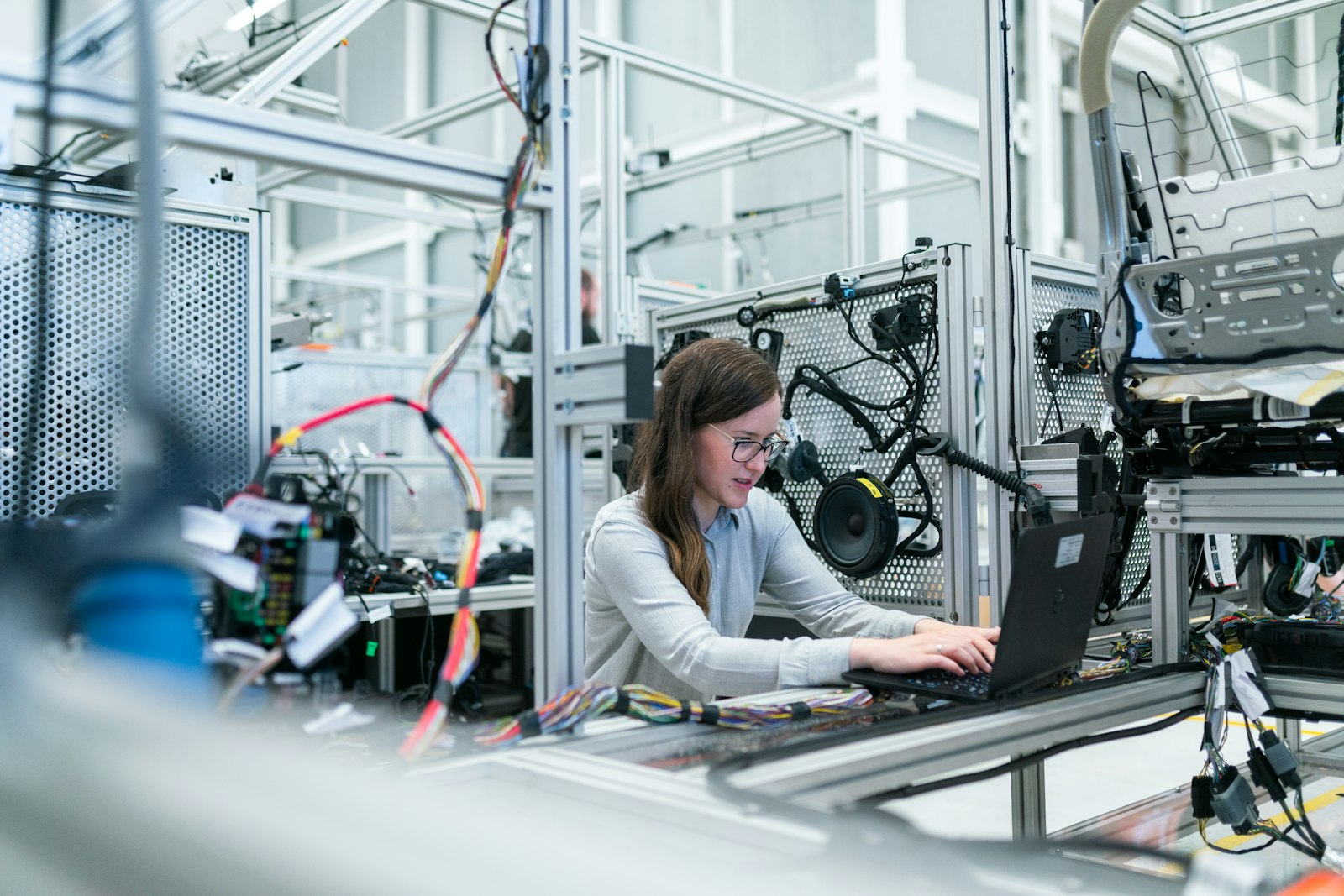
Data Mesh is the shift from "centralized" to "domain autonomy."
1. Zhamak Dehghani's Four Principles
Data Mesh is not merely a technology stack — it is an organizational architecture. In her O'Reilly book "Data Mesh: Delivering Data-Driven Value at Scale," Dehghani defines four principles with precision.
(1) Domain-oriented ownership — data is owned by the domain that knows it best. (2) Data as a product — managed like a product, with consumers, quality, SLAs, and documentation. (3) Self-serve data platform — domain teams must be able to build data products without depending on the IT department. (4) Federated computational governance — a balance between central policy and domain autonomy.
- Domain-oriented ownership — production, quality, equipment, energy, and SCM each own their own data products
- Data products — reusable assets with documentation, SLAs, quality, and lineage
- Self-serve platform — maximize domain teams' data productivity without an IT-team bottleneck
- Federated governance — the dual structure of interoperability standards and domain autonomy
- Metadata first — without catalog, search, and lineage, it is not a Data Mesh
2. Why Data Mesh Fits Manufacturing So Well
The characteristics of manufacturing data align naturally with Data Mesh principles. First, domain knowledge runs deep — it is practically impossible for a central data team to understand what heat-treatment process data means. Second, data characteristics differ radically between domains — vibration time series, vision images, LIMS test results, and ERP costing each demand a different processing pipeline.
arxiv 2601.09744 ("A Governance Model for IoT Data in Global Manufacturing") analyzes in concrete detail a case of applying the federated data mesh pattern to global multi-plant manufacturing. Its conclusion: at the point where the centralized approach fails to handle country- and region-specific regulation and domain diversity, Data Mesh becomes the practical alternative.

The diversity of manufacturing domains is the limit of centralized architecture — and precisely the opportunity for Data Mesh.
3. Data Mesh and the UNS — Complementary, Not Competing
A question that comes up constantly in practice: "Should we adopt Data Mesh or the Unified Namespace (UNS)?" The answer is clear. The two concepts address different layers and complement each other.
- UNS: the standard for real-time operational (OT) data flow (based on MQTT + Sparkplug B)
- Data Mesh: the organizational and governance architecture for analytics and AI domain data products
- The Data Mesh product layer sits on top of the standardized data the UNS creates
- 2025 IDC survey: companies adopting both architectures see 1.7x the ROI of adopting either alone
- 60% of Nextdata OS early adopters are in manufacturing and energy
4. Case Study — Domain Data Products at a Global Pharmaceutical Company
A case published on DataMesh-Architecture.com describes a global pharmaceutical company (Top 10) that reorganized the production, quality, quality assurance, and SCM domains across 12 plants, each with its own data product owner. Previously, scaling R&D data to commercial batches took an average of 14 months; after adopting the domain product model, that fell to nine weeks.
Of the early adopter cases Nextdata Technologies disclosed in an April 2025 exclusive SiliconANGLE interview, 60% are in manufacturing and energy. Dehghani herself has stated that "manufacturing is the domain that aligns most naturally with Data Mesh principles." The reasons: the heterogeneity of the data, the depth of domain knowledge, and an organizational structure that is already naturally decentralized.
How PlantPulse Answers
KOPENS PlantPulse makes the Data Mesh principles concrete from an industrial data operations perspective. The ISA-95 asset model becomes a natural "domain boundary," and data collected and standardized through 200+ protocols is exposed as data products for each domain (line, process, equipment group). A self-service catalog, lineage tracking, and quality SLAs are built in from the start.
Where PlantPulse aligns with Data Mesh most closely is "federated governance." In a manufacturing environment that needs central standard policy and per-domain autonomy at the same time, PlantPulse's policy engine can express top-level compliance and domain exceptions together. Integration with data catalogs such as Nextdata OS and Collibra is also supported through standard APIs.
Closing
Adopting Data Mesh does not mean "buying a tool." It means "realigning the organization." Data product ownership is transferred to domain teams, and the central IT team is reorganized into a platform team. Without this change, buying Nextdata OS will not complete a Data Mesh.
To borrow Zhamak Dehghani's words, "the success of Data Mesh is 100% sociotechnical." Thirty percent tools, seventy percent organization. If manufacturing wants data competitiveness for the next five years, it must start by accepting that ratio honestly. (Related sources: Zhamak Dehghani "Data Mesh: Delivering Data-Driven Value at Scale," O'Reilly; SiliconANGLE April 2025 Nextdata interview; arxiv 2601.09744 IoT Governance; DataMesh-Architecture.com; Bioprocess Online "MES CD-ROM Era")
© KOPENS — Industrial DataOps & PlantPulse Platform